Posts

The Shape of Emotion
Image
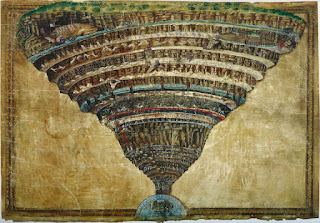
          Emotions exist in perpetual change as if they are approaching something but yet never seem to get there… Is the emotion moving or is it moving us? If it is moving us, is it in a bad way or just a way we couldn’t imagine but which is the most meaningful?      There are really only two things in life, reality and hope, and the art of life is to balance them in a way where we get the best of both. It is no small task to imagine something better than you can currently imagine; what would that look like if you did? If would undoubtedly look crazy at first and then slowly narrow in on something solid. Reality has its limitations, that’s what reality is, a set of defined limitations.  Hope on the other hand has no limitations, and so unlike solving a murder mystery for what happen, which though hard is at least possible to reach an ultimate conclusion, emotions are reaching at the limit of possibility which is endless. This journey co...
If You Feel You Don’t Exist...

Image
     You essentially or functionally don’t when you are aggressive, passive-aggressive or apathetic, because all of those is an orientation to circumstance and not personal belief.      Life is not relative to circumstance but to love and truth, and if the pressures of life, which are arbitrary force us to take a aggressive or passive-aggression stance against it or an apathetic stance with it, then we are like a train on rails that only offer two destinations, neither of which have anything to do with us.      Freedom doesn’t exist when the only movements you are offered is going exactly North or exactly South, especially when all the temperate zones are found but moving East or West. The end result of going North or South is arriving in a frozen wasteland. Fighting circumstance offers one benefit and not fighting it offers another, but charting your own course means you get neither of the benefits and both of the resistances. If your p...

Rick and Morty: Space Snakes and our Relationship with the Unknown

Image
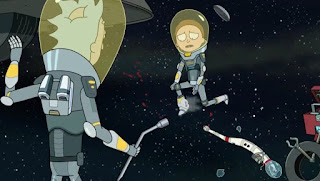
     “If you bit your first contact on its ankle you might be a type zero civilization.”-Rick      Are snakes a common element in dream/archetypal language?      Jörmungandr is the snake from Norse mythology that circles the world and represents the chaos of the unknown at the fringes of our world concept. Thor hits Jörmungandr with Mjölnir out at the edge of the world in the middle of the ocea, but Jörmungandr wasn’t evil. Jörmungandr was a son of Loki, and Odin feared it as it got bigger and so threw it out into the ocean, where it grew to encircle the whole world. It’s interesting how ancient maps draw monsters at the edges of maps, because we have been taught to fear the unknown.      The unknown is a source of happiness as a child, because of the adventure of exploring it, but after failed adventures learning turn into labels of shame we have wear, the unknown becomes more of a risk than a joy. When we are a ...

To say, “suicide is not the answer,” implies that there is only one question, “to live or not to live?”

Image
     To say, “suicide is not the answer,” implies that there is only one question, “to live or not to live?”      I can think of a several questions that come up before the question of “to live or not to live,” even if no one talks about them out loud before the final question seems like the only one left: Who is the happiest person you know, and how happy are they? What is the best relationship you know of and how much of the potential love they could have do they actually?      Even without measuring, even if that were possible, likely whoever came to mind as being in first place didn’t score 100%... which is a pretty sobering realization. Even if we haven’t consciously done the math, even if we have tried to avoid doing the math, we still know it is not 100% and the “why” of that is pretty overwhelming to process.      It’s difficult to give someone a happiness rating, but we could somewhat measure love in a relations...

Why a Classic Pagan Symbol Became a Symbol of Christmas

Image
     The symbols we use to process life go deeper than the traditions that come from them. The archetypes go deeper than tradition and even language as a whole because language came from an effort to express what we perceived as symbols. When looking at myth, religion and even personal dreams, it is best to see them through the symbols rooted in the deepest parts of us and not in cultural portrayals of them.   The symbolism of the modern Christian Christmas scene for example doesn’t make any sense otherwise.      “But ye shall destroy their altars, break their images, and cut down their groves.” Exodus 34:13 A nativity set and a Christmas tree are more like an alter/image and a grove than anything positively described in in the Bible. Does this mean it is bad? Or is it just archetypal language that has meaning to everyone Christian or not?      There are two main symbols which seem to be the most fundamental language of our thoug...

Would you still love me if I...

Image
     "‘Gregor,’ said a voice – it was his mother’s – ‘it’s a quarter to seven. Hadn’t you a train to catch?’ That gentle voice!"      Franz Kafka in his book Metamorphosis paints a good picture of the struggle of whether to listen to the fear that looks beyond people's words, or the hope that encourages us to take them at face value. It’s hard to know whether to trust words or actions, because there are accidents and misunderstandings, there potentially is so much to win or lose by exploiting or being naïve to the difference. We are born wanting to hope the best of people, but passive-aggression and deception  seem to be the game of life, and even if we don’t want to play, it doesn’t mean we want to be played. Is there something innately different about us that makes us not want to play the game, or do we just notice the inconvenience to us when others play it and fail to notice the convenience of the game we are playing sub-consciously?   ...

Bad Luck and the Nature of Addiction

Image
     “I didn’t mean to do that.” “That wasn’t my intention.” “I know this looks bad, but it’s not what it looks like.”      What percentage of the things that surround us or percentage of the consequences of our actions were our intention?      Many stories and mythologies have items that are cursed if touched or carried would cause the worst fortune to happen. How is it that it seems likely to be the case sometimes that there is some curse on us that overshadows our intentions an abilities? We realize we don’t want to do some habit, smoking, drinking, gossiping, aggression or passive-aggression, and somehow we can’t do it? Isn’t it odd that we can both want to do something and not want to do it at the same time? And what is more odd, is that we can consciously not want to do something and then do it anyway? If we are not controlled by our own consciousness, then what are be controlled by?      I’m probably not the only o...

Why is it sometimes hard to be happy for the success of others

Image
Why is it sometimes hard to be happy for the success of others      If you don’t trust yourself, what could you trust? In order to trust someone else you would have to trust your judgment of them… there’s no way around it, you can’t bypass yourself out of life, although sadly that doesn’t mean we can’t try.      Trust or confidence is an estimation of an obstacle overcome, which enables us to estimate obstacles ahead of us and know that we can overcome something at least as hard or maybe harder.      When weightlifting it is unwise to try and lift more than about 10 pounds more than the heaviest thing you have lifted. Our muscles might be able to do it because they can grow quickly, but our tendons which don’t have direct blood flow might not be able to handle it, not to mention limitations in our ability to balance a much higher weight than we are used to might get us into trouble and the weight might fall on us. There is no exact num...

Facing our Inner Demons: The shadow of our heart

Image
“Dead people receive more flowers than the living ones because regret is stronger than gratitude.” ― Anne Frank I think that it is safe to say that our deepest drive in life is not to receive flowers but to love and be loved. If that is the case, then what are we most likely going to provoke regret for? I think we all feel in our hearts that if we want to influence someone for good, that the actions that could produce gratitude are better than the ones that produce regret, but what if that doesn’t work? If a situation could deteriorate quickly do we have time to sow seeds of altruism that could bear the fruit of gratitude if an action couldn’t be altruistic if it has any controlling or manipulating motive attached?                 Love is creating a space for someone big enough for even the parts of them that they don’t understand or like. This means there is no control in love.    If there ...

Bob Ross Insights Hidden in his Painting

Image
Bob Ross Insights, Hidden in his Painting “I can't think of anything more rewarding than being able to express yourself to others through painting. Exercising the imagination, experimenting with talents, being creative; these things, to me, are truly the windows to your soul.”                           ― Bob Ross, The Joy of Painting with Bob Ross, Vol. 29 What do we find when we look into the window of his soul? One of the first things that might come to mind when you think about Bob Ross is: “Happy clouds,” and “We don’t make mistakes, we have happy accidents.” How are those two things related? Does it go deeper than debunking the assumptions that there is more than only happy blue skies? This might seem like a stretch, but looking at the mere percentage of clouds appearing in Bob’s paintings shows something interesting. In 91% of his paintings there are at least one tree, but in only 44% there are at least...